


When Stardom Met Simplicity: The Legend of Dharmendra - Parag Biswas
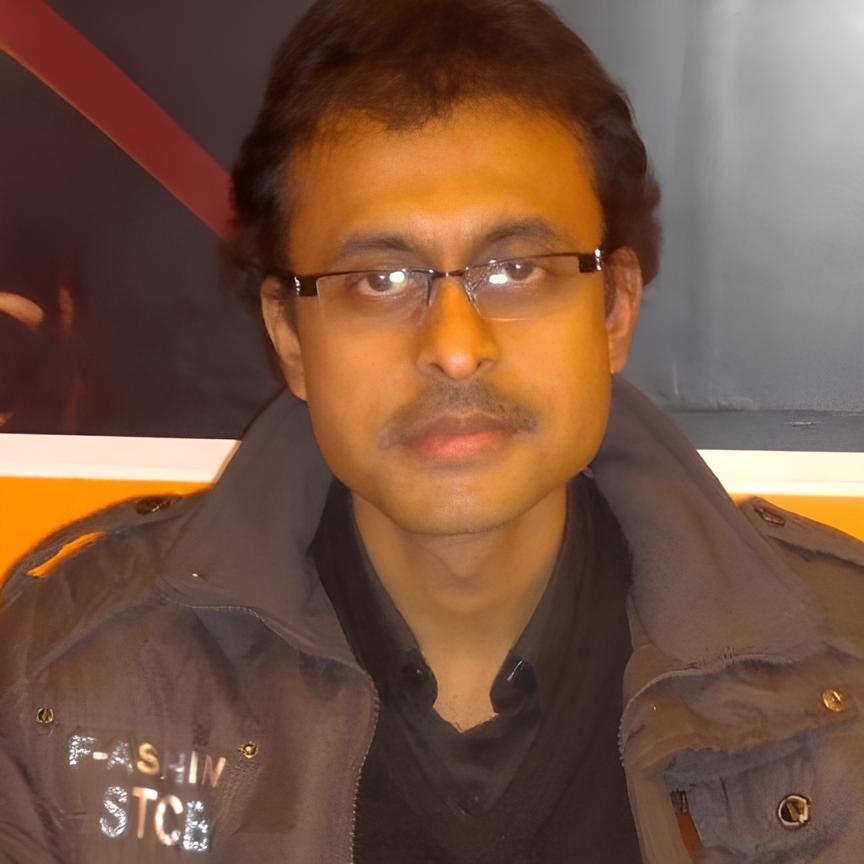
In the “Reminiscences” section of “The Substance and the Shadow,” - the autobiography of the legendary Indian film actor Dilip Kumar - the He-Man of Indian cinema, Dharmendra had revealed that long before he had joined films, he had visited Bombay and had boldly gone to his idol Dilip Kumar’s house, walked in and reached right up to his bedroom only to run away after the legendary thespian woke up to find a stranger in his home.
The interesting anecdote from sometime in 1952, which Dharmendra talks about in detail in the autobiography, epitomizes the man, the hero and the actor that the Ludhiana-born thespian was.

In the vast landscape of Indian cinema, there are stars, and then there are superstars, who not only dominate the posters, but also become household names. Dharmendra was one such superstar - an exceptional man, a quintessential hero and a shining example of human values, whose quiet dignity and modesty accounted for his iconic status, both off and on the screen.
Not only in the “Reminiscences,” but also in his several interviews to the media, that brought out his emotional self, the veteran Bollywood actor recalled many incidents of his life that made the listeners laugh, when he laughed; and weep, when he wept.
Dharmendra once recounted how on seeing his teacher, Ruknuddin Master, in a market one day after the partition of India was announced, he ran towards Ruknuddin with his head lowered, hugged him and urged him to stay back in India.
In an interview with actor Vinay Pathak, he very emotionally recalled that when the partition happened, he was in the 8th standard and there was not a semblance of animosity between the Hindus and Muslims of India then. “Tab mere dost thay Abdul Jabbar, Akram... hum log itnay pyaar se rehte thay. Kucch bhed bhaav ratti bhar nahi tha. (Back then my friends were Abdul Jabbar, Akram…we lived together with so much love. There was not even a hint of discrimination),” he recounted during the interview.
On Salman Khan’s show, “Dus Ka Dum,” Dharmendra had recalled how, when he was in the 6th standard, he fell in love with an 8th standard girl, Hamida. He spoke at length about his fascination with Hamida and said that after the partition he never saw her again. “Pakistan ban gaya, Hamida chali gayi. (After the formation of Pakistan, Hamida left),” he remembered with tears in his eyes.
The great actor also turned emotional on another reality show, “Superstar Singer,” when a video depicting his struggles was shown. Talking about a bridge, which he used to visit after school, he emotionally said: “This is where I used to dream of coming into showbiz. Whenever I go to that bridge, I tell myself, ‘Dharmendra, you’ve become an actor!’”
These heart-rending reflections explain perhaps why his actions, expressions and dialogues touched the inner core of the heart of his millions of fans across the globe during his 65-year-old career spanning over 300 films.
One such fan is Pratap Chandra Agarwal, the former Chairman of Kurseong Municipality in Darjeeling, where Dharmendra had come along with Asha Parekh and the entire team of the renowned filmmaker J. Om Prakash in 1964 to shoot for the famous film, “Aye Din Bahar Ke.”
The 92-year-old businessman, whom “Dharam Paaji” had inspired to make a film, recalled how kind, compassionate and cordial the legendary Bollywood icon was. “Dharam ji was an extremely amiable personality. His down to earth demeanour and natural kindness were a warm comfort on set. He could develop an emotional attachment with all at the drop of a hat,” recounted Agarwal, who served as a location manager during the shoot.
In an emotional coincidence in the last day of the life of the vastly emotional man, the first poster of his final film, “Ikkis,” which is slated to be released on December 25, 2025, was unveiled the day he passed into history to become an immortal legend.
It was his emotional self perhaps that drove him to play emotional roles during his early years, which saw him play supporting characters in films such as “Boy Friend” (1961). It was followed by a series of romantic films largely centered on strong emotional content.
From 1960 to 1969, there was no year when a Hindi film with Dharmendra as the hero did not hit the big screen. He was frequently casted as the charming hero opposite established actors in this period, during which he sailed through emotionally diverse roles with equal elan in films like “Aye Din Bahar Ke” (1966), “Mere Humdum Mere Dost” (1968), “Pyar Hi Pyar” (1969) and “Aya Sawan Jhoom Ke” (1969).
His transition from romantic roles in the later years was seamless and he soon emerged as a formidable action hero.
During his artistic and popular peak between 1970 and 1979, he also began making a mark with his charisma and impeccable comic timing.

Dharmendra’s honeymoon with emotional fluctuations in his reel and real life, however, continued unabated through his chemistry with Hema Malini, which resulted in his marriage with her and a string of box office successes, such as “Tum Haseen Mein Jawan” (1970), “Sharafat” (1970), “Seeta Aur Geeta” (1972), “Raja Jani” (1972), “Jugnu” (1973), “Pratiggya” (1975), “Sholay” (1975), “Charas” (1976), “Dream Girl”(1977), “Azaad” (1978) and “Dillagi” (1978).
An actor par excellence, Dharmendra could fit into the boots of any character with ease, doing equal justice to every role.
Not only as a reel hero, but also as a real hero, Dharmendra will continue to inspire generations to come.
The legendary superstar, who was honoured with the Padma Bhushan in 2012, will not only be remembered for the iconic dialogues that have become immortal in Bollywood history, but also for his iconic life as a modest human being and an exceptionally brilliant actor.
He was a man, who rose from rural roots and achieved the success, which few could reach and left behind a cinematic legacy that few can match.
E.O.M.
About the author :
A national and international award-winning teacher, journalist, anchor, quizmaster, TV, web & Akashvani commentator and sports expert, educational trainer, motivational speaker, TV, web and film actor and filmmaker and social activist.
E.O.M
PARAG BISWAS’ MAIL ID: paragbiswas1972@gmail.com


Comments